
Explore the guide · Tap a topic
Meet the breedA snow-ready coat and a famous smileCharacter, size, and what surprises new owners
The Samoyed was shaped by life with people in Arctic Siberia: hauling, herding, and sharing close quarters. The famous white coat protected a working dog, while the friendly expression belongs to a companion who wants to be included.
Adults commonly weigh 35–65 lb, and 12–14 years is a lifespan guide. Expect an active dog, a serious brushing schedule, and a great deal of white hair in places where no dog has been.
Daily life & exerciseA day with a SamoyedExercise, play, and a practical daily rhythm
The Samoyed's ancestors worked and lived closely with people in Arctic Siberia. That history shows up in an active dog who wants to be part of the day's business, not parked alone in a yard. Plan for walks, play, and a little problem-solving together.
Use a secure fence or a lead outdoors: a curious Sammy can roam farther than expected. Their thick coat was built for cold work, so offer shade and water and ease off strenuous activity in warm weather.
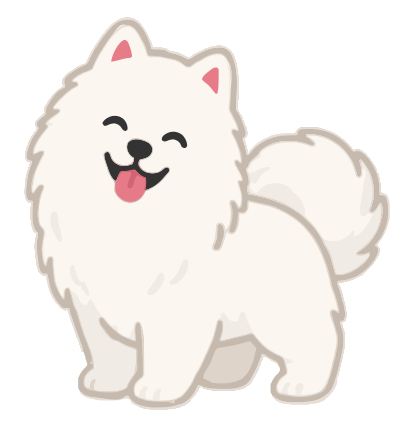
What would your Samoyed love?
Add their age, size, and favorite things. We’ll find a few good places to start.
Training & temperamentLearning together with a SamoyedGood manners and individual personality
Friendly, gentle, and famously sociable, a Samoyed can also be clever enough to invent their own entertainment. Their closeness to people is part of the breed's history; long stretches of isolation can leave them distressed and destructive. Company is a need here, not a reward for good behavior.
Begin manners early, keep rules consistent, and use warm, clear rewards. Practice settling, coming when called, and greeting visitors without a snowstorm of excitement. A Sammy learns best when lessons feel like something you do together.
Coat & groomingThe Samoyed coatGrooming and everyday care
There are two layers to that snowy coat: a longer outer layer and a dense, soft undercoat. Brush daily to lift loose fur and stop tangles, then expect an extra avalanche when the undercoat sheds more heavily once or twice a year.
Work gently through mats with a suitable slicker brush or metal comb, and check nails regularly. The coat helped this breed in Arctic weather; it still needs human help in a living room.
Bringing home a Samoyed puppy?
Plan their first days with a little help from our puppy welcome kit.
Build a puppy welcome kitProduct starting pointsGood finds for your SamoyedFood, play, care, and rest
Choose food for your Samoyed's age and actual weight. A secure lead or fenced play space matters more than an impressive toy collection for a dog inclined to roam; try games that let you work together.
For coat care, start with a brush and comb that can reach the dense undercoat without pulling at the skin. Add a cool resting place for warm days, and choose a bed or harness using this dog's measurements.
Health & lifespanCaring for a Samoyed over time12–14 years is a guide, not a forecast
The Samoyed has a lifespan guide of 12–14 years, though no range predicts one dog's future. Keep a record of weight and changes in appetite or activity, and plan preventive care with your veterinarian.
If you are meeting a breeder, ask to see the parents' screening records. The AKC lists hip evaluations, heart examinations, and eye examinations for the Samoyed. These checks are questions for breeding stock, not a prediction of a puppy's future health.