
Explore the guide · Tap a topic
Meet the breedA comic face with a careful exercise planCharacter, size, and what surprises new owners
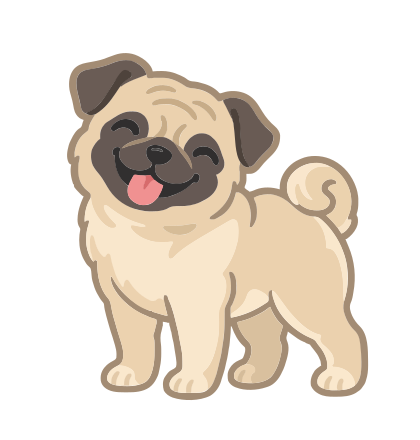
A Pug's wrinkled face and curled tail are easy to recognize. Its short muzzle deserves more attention than the funny expression: plan exercise around cool temperatures and comfortable breathing.
Adults commonly weigh 14–18 lb; a typical lifespan guide is 13–15 years. These are breed-wide guides, never targets or forecasts for an individual pet.
Daily life & exerciseA day with a PugExercise, play, and a practical daily rhythm
Your Pug may prefer a gentler routine, with walks and play adjusted to the individual. Low activity does not mean no activity: watch how your dog moves and ask your veterinarian about any breathing or mobility concerns.
For the Pug, a small obstacle game can be fun to learn together; keep jumps and difficulty suitable for age and build.
What would your Pug love?
Add their age, size, and favorite things. We’ll find a few good places to start.
Training & temperamentLearning together with a PugGood manners and individual personality
The Pug is often charming, loving, and mischievous.
Use patient, rewarding lessons and let your Pug build confidence at a comfortable pace. A harsh correction teaches less than a clear, repeatable cue.
Coat & groomingThe Pug coatGrooming and everyday care
The Pug's short coat is simpler to brush, but a grooming session is still a useful chance to check the skin and paws. A weekly brushing is a sensible baseline; add sessions when the coat sheds or tangles more.
Bringing home a Pug puppy?
Plan their first days with a little help from our puppy welcome kit.
Build a puppy welcome kitProduct starting pointsGood finds for your PugFood, play, care, and rest
Choose food for your Pug's life stage and measured weight. The breed range is a clue, but the portion and fit should follow the individual. Use this smaller dog's measurements for a harness, carrier, crate, or bed; a breed name is not a size chart.
For your Pug, start with something suited to agility-style games, plus a brush chosen for the actual coat. Add a comfortable rest spot; a good product list should follow this dog's interests, not a breed stereotype.
Health & lifespanCaring for a Pug over time13–15 years is a guide, not a forecast
The Pug has a lifespan guide of 13–15 years, though no range predicts one dog's future. Keep a record of weight and changes in appetite or activity, and plan preventive care with your veterinarian.
Short-muzzled dogs can struggle in heat and humidity. Keep exercise comfortable, provide shade and water, and ask your veterinarian about any noisy or labored breathing.
If you are meeting a breeder, ask to see the parents' screening records. The AKC lists hip evaluations, eye examinations, and knee evaluations for the Pug. These checks are questions for breeding stock, not a prediction of a puppy's future health.