
Explore the guide · Tap a topic
Meet the breedThe white guardian on night watchCharacter, size, and what surprises new owners
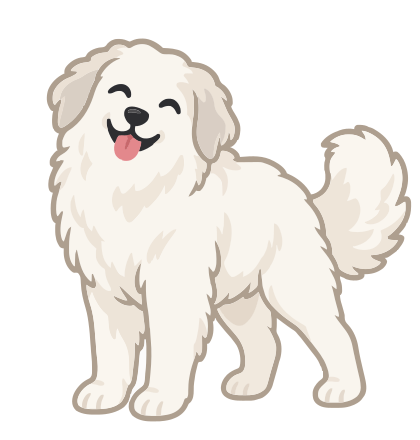
The Great Pyrenees was bred to guard flocks, often without a person beside it. Quiet independence, a heavy white coat, and night-time alertness all make more sense in light of that job.
Adults commonly weigh 85–115 lb; a typical lifespan guide is 10–12 years. These are breed-wide guides, never targets or forecasts for an individual pet.
Daily life & exerciseA day with a Great PyreneesExercise, play, and a practical daily rhythm
Regular walks and play are a sensible starting rhythm for a Great Pyrenees. Then look at your dog's energy, age, and health to decide whether they want more adventure or more time on the sofa.
What would your Great Pyrenees love?
Add their age, size, and favorite things. We’ll find a few good places to start.
Training & temperamentLearning together with a Great PyreneesGood manners and individual personality
The Great Pyrenees is often smart, patient, and calm.
Expect some independent decisions. Reward your Great Pyrenees for checking in with you, then build cues in small steps instead of turning practice into an argument.
Coat & groomingThe Great Pyrenees coatGrooming and everyday care
The Great Pyrenees has a double coat with a softer underlayer; brush through it gently rather than only smoothing the surface. A weekly brushing is a sensible baseline; add sessions when the coat sheds or tangles more.
Bringing home a Great Pyrenees puppy?
Plan their first days with a little help from our puppy welcome kit.
Build a puppy welcome kitProduct starting pointsGood finds for your Great PyreneesFood, play, care, and rest
Choose food for your Great Pyrenees's life stage and measured weight. The breed range is a clue, but the portion and fit should follow the individual. Use this giant dog's measurements for a harness, carrier, crate, or bed; a breed name is not a size chart.
For your Great Pyrenees, start with something suited to short play sessions, plus a comb that reaches the undercoat. Add a comfortable rest spot; a good product list should follow this dog's interests, not a breed stereotype.
Health & lifespanCaring for a Great Pyrenees over time10–12 years is a guide, not a forecast
The Great Pyrenees has a lifespan guide of 10–12 years, though no range predicts one dog's future. Keep a record of weight and changes in appetite or activity, and plan preventive care with your veterinarian.
A giant dog's growth, weight, and mobility deserve a deliberate plan. Ask your veterinarian about age-appropriate feeding and watch for changes in how comfortably your Great Pyrenees moves.
If you are meeting a breeder, ask to see the parents' screening records. The AKC lists knee evaluations and hip evaluations for the Great Pyrenees. These checks are questions for breeding stock, not a prediction of a puppy's future health.